Events of CHP
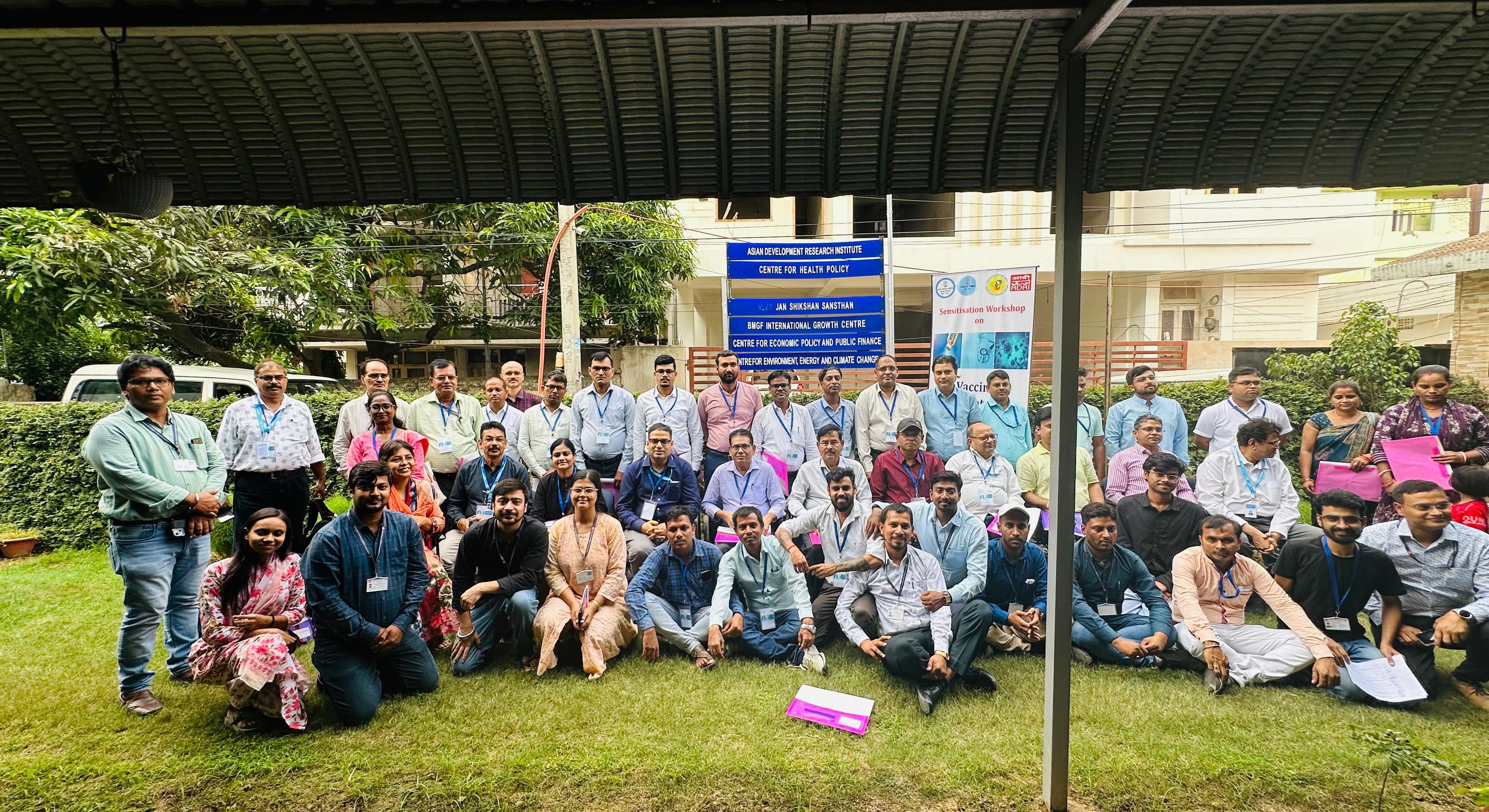
Patna. July 9. An effectively-managed surveillance of vaccine-preventable infectious diseases (VPD) like Typhoid, Polio, Influenza, Measles, etc. is a must if we hope to control or eradicate them from our society. This was the view expressed by several World Health Organization (WHO) officials who were participating in an Induction Training Workshop on VPD today. This three-day event was organized jointly by the State Health Society, Bihar and Asian Development Research Institute (ADRI). Surveillance aims to identify and report outbreaks of such diseases so that timely preventive action can be taken by breaking the chain of transmission. The Government of India had hitherto been responsible for this surveillance since 2004 through the Integrated Disease Surveillance Program (IDSP).
Speaking on the occasion, Dr. Sanket Kulkarni, Joint Director, NCDC lauded Bihar for reaching an infectious disease reporting level of more than 90 percent on the IHIP portal over the last 2 years. He hoped that Bihar will be able to successfully implement VPD surveillance by training its workforce through such workshops. Dr. Ragini Mishra, State Epidemiologist talked about the VPD surveillance activities that was being done by WHO. The NPSN Units till date would now be handed over to the government system through the IDSP network in a phased manner. In the first phase, WHO would hand over VPD surveillance to the IDSP units in 8 districts: Buxar, Arwal, Gopalganj, Jehanabad, Khagaria, Lakhisarai, Sheikpura, and Supaul. Shri Ram Ratan, SPO-RI cell, Bihar emphasized on the importance of VPD surveillance and data quality with regard to immunization programs.
Dr. Arun Kumar, NPO VPD Surveillance, WHO-Delhi talked about the critical role of a robust surveillance system and necessity of VPD surveillance. The diverse health functionaries like the medical officers, ANMs, ASHAs, and lab technicians will have to be sensitized by the respective district epidemiologists about the various steps for conducting surveillance like sample collection, reporting cases and then following them up. The Typhoid Conjugate Vaccine is about to be launched in Bihar while the HPV vaccine is already there. He added that surveillance of these two vaccines will be critical in future. WHO’s Dr. Rajesh Verma gave an explanation of the working of this surveillance system. He also stressed that the network of private healthcare facilities as Informer Units must be roped in for sensitizing purposes because 56 percent of all infectious cases that come up originate from this network.
Earlier, the Member-Secretary of ADRI, Dr. Ashmita Gupta, welcomed all the participants. She stated that she was all for a pro-active public health system which would focus on preventing diseases and promoting wellness rather than just reacting after a disease has struck. She hoped that this workshop will be a step in that direction. The workshop also saw the participation of Dr. A. K. Shahi, State Surveillance Officer, IDSP, Govt. of Bihar; WHO’s Dr. Ujjawal and Dr. Kumud; and Dr. Mousumi Gupta of ADRI. The workshop was attended by 45 key IDSP functionaries from 8 districts of Bihar and state officials. Dr Sanchita Mahapatra, the Epidemiologist and Senior Researcher of ADRI offered the Vote of Thanks.