Events of ADRI Patna
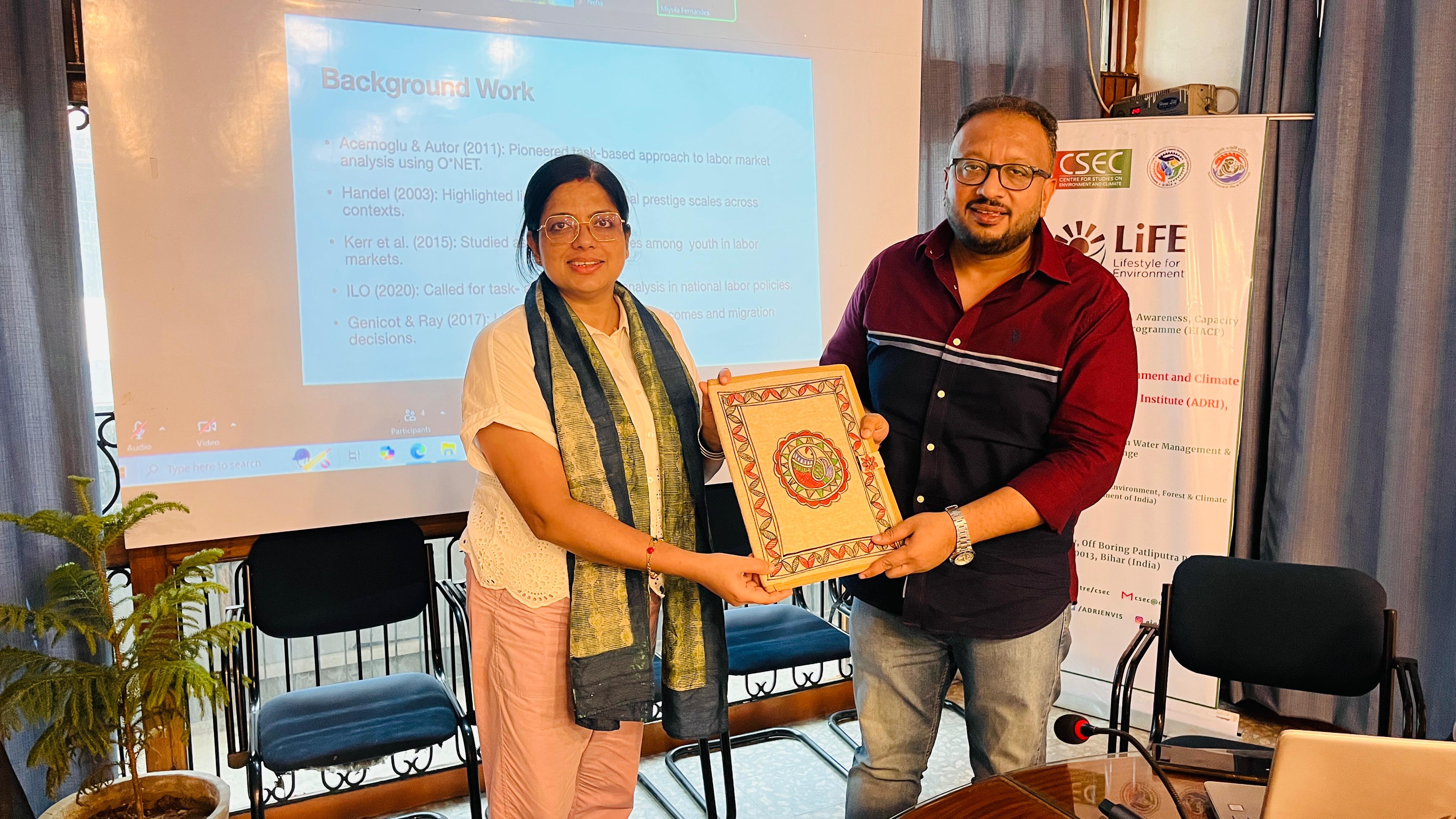
Patna. June 20. The concluding day of the ADRI Innovation workshops being organized by the Asian Development Research Institute (ADRI) in memory of its founders - Dr. Shaibal Gupta and Dr. Prabhat P Ghosh - started with its Member-Secretary, Dr. Ashmita Gupta welcoming all the participants.
Speaking on the occasion, Senior researcher and Epidemiologist at ADRI Dr. Sanchita Mahapatra stated that ADRI has been instrumental in providing technical support to disease surveillance initiatives in Bihar. Bihar remains among the top five best performing states in India with regard to Integrated Disease Surveillance Programme (IDSP) reporting. It has received appreciation from the Central Ministry of Health and Family Welfare in New Delhi. Dr. Suraj Shankar, Team Lead of CHP-ADRI gave a comprehensive presentation on the Ayushman Bharat Pradhan Mantri Jan Arogya Yojana and how ADRI, in association with Government of Bihar’s BSSS, has been developing various knowledge products and conducting studies for the successful implementation of this health scheme to attain universal health coverage. Dr. Satyendra Kumar, also of CHP-ADRI, stressed on the need for training of the scheme’s executors. Subsequently, different officers of ADRI’s AB-PMJAY team talked about their contributions and views on themes like the Anti-Fraud Dashboard, TMS 2.0 Training, health benefit packages, the handling of finances of this scheme, etc. ADRI’s Dr. Deepak Kumar pointed out the different policy gaps and challenges that have come up while implementing the scheme. One such challenge was a manpower shortage when it came to rolling the scheme out. Ms. Gurinder Randhawa of the Anti-Fraud Division of BSSS stated that if a beneficiary has been deliberately made to pay from his own pocket while undergoing treatment under this scheme, it is the job of the State Health Society of Bihar to return him these moneys.
ADRI’s Dr. Ashmita Gupta and Dr. Miyola Fernandes along with Dr. Neha Hui presented a study, done in partnership with the University of Reading, on the measurement of aspirations and skill gaps. They said that Indian occupations and aspirations are led by factors like prestige, income, job duration, power and autonomy. So, it is important to study the different task measures of jobs for better policy-making and to develop better schemes to bridge the gap between unemployment and job aspirations.
Also speaking on the occasion were Subhadeep Dhar and Ishat Tapader. The event was attended widely virtually and in the in-person mode.