Events of CSEC
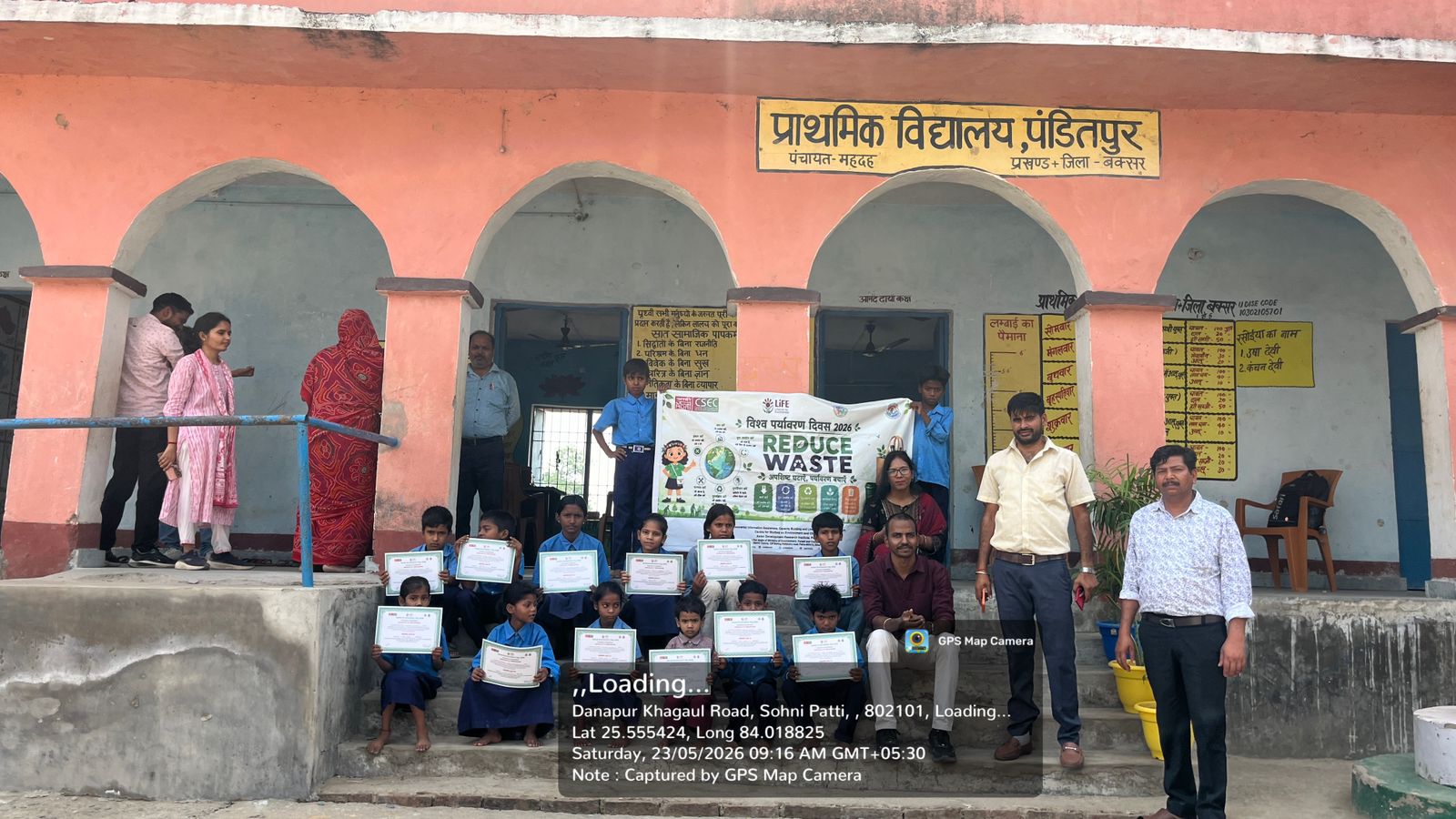
Buxar, May 25. As part of the series of awareness campaigns being organized on the occasion of World Environment Day 2026, EIACP-ADRI, Patna organized an awareness drive and drawing competition on the theme of Reduce Waste on Saturday, May 23 at the Primary School, Panditpur and Girls’ Primary School, Badi Basauli in Buxar. EIACP is supported by the Ministry of Environment, Forest and Climate Change, Government of India, and is run by the Patna-based Asian Development Research Institute (ADRI).
The objective of this programme was to spread awareness among students regarding waste reduction, environmental conservation, and environmental protection. In the drawing competition organized on the theme of Reduce Waste and Save Nature, students prepared attractive drawings depicting the behavior of people towards waste and the recycling, reuse, and reduced use of single-use plastics as well as conservation of nature. Approximately 60 students participated in the event.
Along with this, awareness sessions on sustainable lifestyle practices, waste reduction, and Mission LiFE were also conducted. At the end of the programme, the students took a pledge to adopt an environment-friendly lifestyle.
Events of CSEC
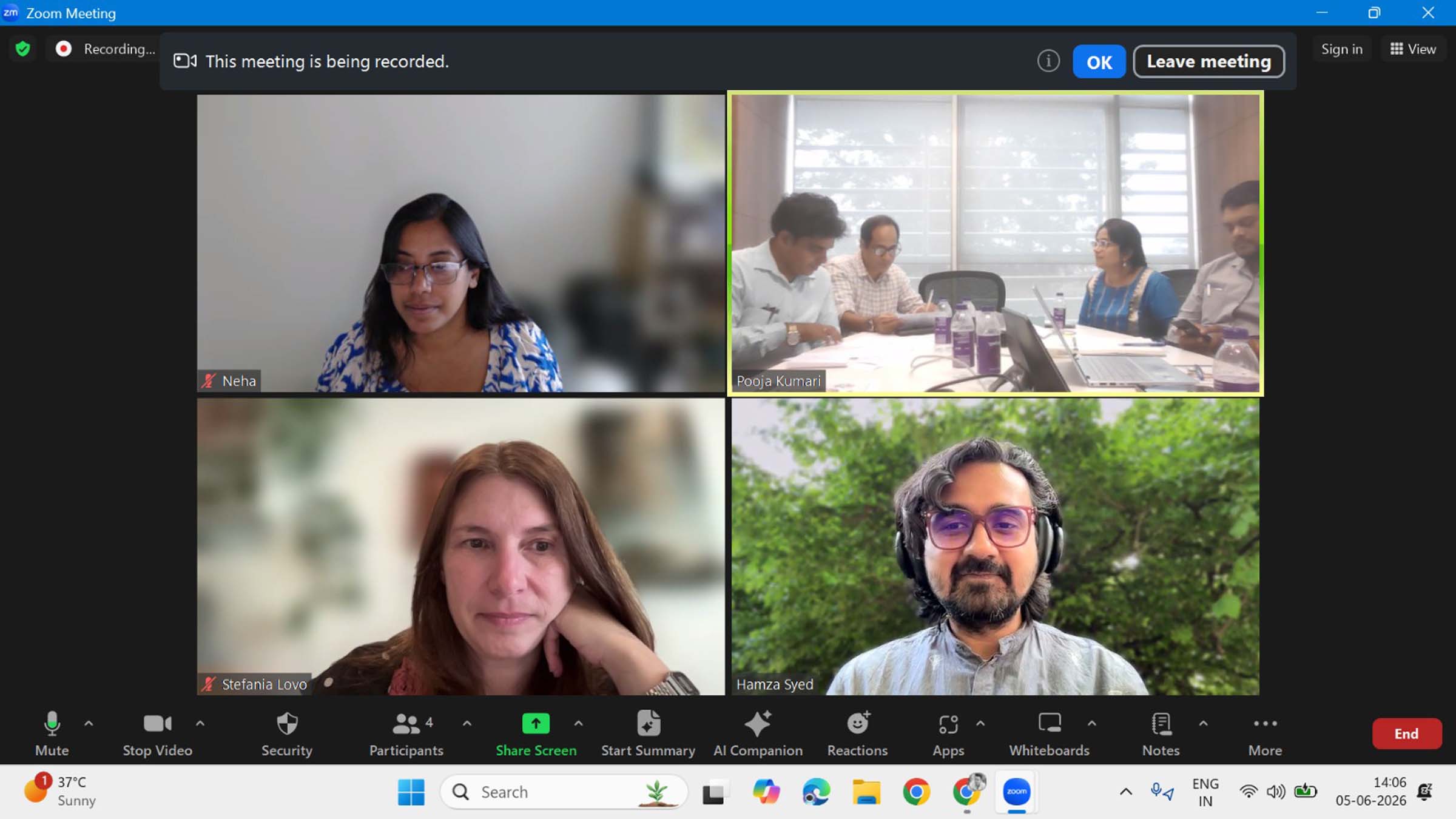
Patna. June 5. On the occasion of World Environment Day, EIACP-ADRI, which is supported by the Ministry of Environment, Forest and Climate Change, Government of India, organized a virtual workshop today in collaboration with the Bihar State Pollution Control Board, Patna. The theme of the workshop was “Climate Action, Waste Reduction and Sustainable Development.” EIACP-ADRI is the climate change unit of the Asian Development Research Institute (ADRI). The programme commenced with a Welcome Address by Dr. Ashmita Gupta, Member Secretary of ADRI.
The first speaker was Dr. Anshuman Tiwari of Ashoka University as well as the University of Chicago. He presented the findings of his research on “Industrial Water Pollution and Agricultural Production in India.” Discussing the adverse effects of industrial pollution on the water quality of the Ganga River, he stated that improvements in water quality have been observed from Buxar to Kahalgaon, while some concerns still persist in the Hajipur region. He further noted that poor river water quality has had a negative impact on agricultural production. His study used water pollution indicators such as BOD (Biochemical Oxygen Demand) and COD (Chemical Oxygen Demand).
The second speaker was Mr. Shubhro Bhattacharya, a PhD researcher at the University of California, San Diego. He delivered a lecture on “Intergenerational Effects of Environmental Attitudes and Behaviours.” In his presentation, he explained that when children are made aware of environmental conservation in schools, they also encourage their parents to become more environmentally conscious and responsible.
In the post-lunch session, Mr. Hamza Syed of the London School of Economics spoke on the role of electricity supply in rural India, its impact on socio-economic inequalities, and the importance of access to energy for rural development. He emphasized on the fact that reliable and quality electricity supply not only promotes economic activities but also contributes significantly to improvements in education, healthcare, and overall living standards.
This was followed by the Keynote Address, which was delivered by Prof. Stefania Lovo of the University of Reading, United Kingdom. The topic of her lecture was “Climate Change, Environmental Sustainability and Development.” She analyzed the impacts of climate change on poverty, energy transition, natural resource extraction, and related institutional arrangements. She stressed on the need for clean energy, environmental governance, sustainable mining, and climate-resilient development policies. She also shared her views on the potential of critical minerals in Bihar and the associated environmental and social dimensions.
The programme witnessed active participation from the Bihar State Pollution Control Board and featured Dr. Naveen Kumar (Senior Scientist), Mr. S. N. Jaiswal (Scientific Advisor), and Mr. Pappu Kumar (NCAP Consultant). Representatives from ADRI included Dr. Sunil Kumar Gupta, Dr. Deepak Kumar, Dr. Arpan, Mr. Gulshan Patel, and Mr. Sanjeev Kumar. The programme concluded with a vote of thanks and closing remarks.